
Introduction
DevOps has become a cornerstone of modern software development and IT operations. In a fast-paced digital world where delivering high-quality software quickly is critical, traditional siloed approaches between development (Dev) and operations (Ops) have proven inefficient. DevOps aims to break down these silos, fostering collaboration, automation, and continuous improvement. In this blog, we’ll explore what DevOps is, why it matters, its core principles, key practices, and the tangible benefits organizations can achieve by adopting DevOps.
Table of Contents
What is DevOps?
DevOps is not a specific tool or technology. Instead, it is a cultural and professional movement that emphasizes collaboration and integration between software developers and IT operations professionals. According to the DevOps Institute, DevOps represents a set of practices and cultural philosophies that improve an organization’s ability to deliver applications and services at high velocity, evolving and improving products at a faster pace than organizations using traditional software development and infrastructure management processes.
The term “DevOps” itself combines “development” and “operations.” It signifies the integration of these two historically separate disciplines, enabling organizations to build, test, and release software rapidly and reliably.
The Origins of DevOps
DevOps emerged in response to the growing complexity of software deployment and the limitations of conventional “waterfall” development models. In 2009, Patrick Debois popularized the DevOps concept during the first DevOpsDays event in Ghent, Belgium. The event focused on improving collaboration between Dev and Ops professionals. Since then, DevOps has evolved into a global movement with widespread adoption in enterprises, startups, and government organizations alike.
Core Principles of DevOps
DevOps revolves around several foundational principles. These principles guide teams in creating a culture of trust, efficiency, and continuous improvement.
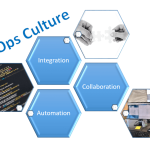
Collaboration and Communication
DevOps dismantles traditional barriers between development, QA, and operations teams. Cross-functional teams share ownership of the entire software lifecycle, which improves communication, reduces misunderstandings, and accelerates delivery.
Automation
Automation is at the heart of DevOps. Repetitive and manual tasks such as testing, deployment, provisioning, and configuration management are automated to reduce human error and increase consistency.
Continuous Integration and Continuous Delivery (CI/CD)
Continuous Integration (CI) involves frequently merging code changes into a shared repository, where automated builds and tests detect issues early. Continuous Delivery (CD) ensures that code is always in a deployable state, enabling faster and safer releases. Tools like Jenkins, GitHub Actions, and GitLab CI/CD help implement CI/CD pipelines. Learn more about CI/CD best practices from the Atlassian guide.
Infrastructure as Code (IaC)
IaC allows teams to manage infrastructure using code and version control systems. This ensures infrastructure is consistent, predictable, and reproducible. Tools like Terraform and Ansible are commonly used for IaC. The HashiCorp Terraform documentation provides detailed strategies for infrastructure automation.
Monitoring and Feedback
DevOps teams continuously monitor applications and infrastructure to catch performance issues, security vulnerabilities, and operational bottlenecks before they affect users. Monitoring tools like Prometheus, Grafana, and Elasticsearch provide real-time insights into system health.
Key DevOps Practices
DevOps isn’t just a philosophy; it’s a set of actionable practices that teams integrate into their workflows.
Continuous Integration (CI)
CI involves merging developers’ code into a central repository frequently. Automated builds and tests verify each merge to catch issues early.
Continuous Delivery/Deployment (CD)
CD ensures that code changes can be released into production reliably and fast. Continuous Delivery requires human approval before deployment, while Continuous Deployment automates this final step based on passing tests and policies.
Version Control
Using version control systems such as Git allows teams to track changes, manage branches, and collaborate more efficiently.
Automated Testing
Automated testing detects defects early and ensures new code does not break existing functionality. Automated test suites include unit tests, integration tests, and UI tests.
Configuration Management
Configuration management ensures environments are standardized and consistent. Tools like Chef, Puppet, and SaltStack define system states and apply desired configurations automatically.
Benefits of DevOps
DevOps delivers measurable benefits when implemented properly.
Faster Time to Market
By automating testing and deployment and enabling incremental changes, teams can release features faster.
Improved Quality and Reliability
Automation reduces human error. With CI/CD and automated testing, teams discover bugs earlier in the development cycle.
Enhanced Collaboration
DevOps fosters shared responsibility across teams, improving morale, reducing miscommunication, and encouraging continuous learning.
Greater Scalability and Resilience
With automated infrastructure and monitoring, systems are easier to scale and recover from failures.
Better Customer Satisfaction
Faster releases and improved quality mean customers receive value more quickly and consistently.
Cost Efficiency
Automation and efficient workflows reduce overhead, rework, and manual intervention, cutting operational costs over time.
Challenges in Implementing DevOps
While DevOps offers substantial advantages, adoption can be challenging.
Cultural Resistance
Teams accustomed to traditional roles may resist change. Successful DevOps requires leadership support and a willingness to embrace new practices.
Tool Overload
The DevOps ecosystem is rich with tools. Organizations must choose the right tools that fit their needs rather than adopting every new technology.
Skill Gaps
DevOps requires cross-domain knowledge spanning development, operations, testing, automation, and security. Ongoing training is essential.
Conclusion
DevOps is more than just a buzzword. It’s a fundamental shift in how software is developed, deployed, and maintained. By emphasizing collaboration, automation, and continuous improvement, DevOps enables organizations to deliver higher-quality software faster and with greater reliability. Whether you’re a developer, operations engineer, or technology leader, understanding DevOps principles and practices is essential in today’s competitive software landscape.
For deeper learning, explore additional resources like the DevOps Institute certifications and the AWS DevOps Practices Guide, which offer structured approaches to implementing DevOps in real-world environments.
Also Check The Ultimate Future of Artificial Intelligence in 2026









1 thought on “Complete Introduction to DevOps – Principles, and Benefits 2026”